21 Jun 2026
Mapping Demographic Shifts in Participation Rates for Table Game Variants on Mobile Platforms
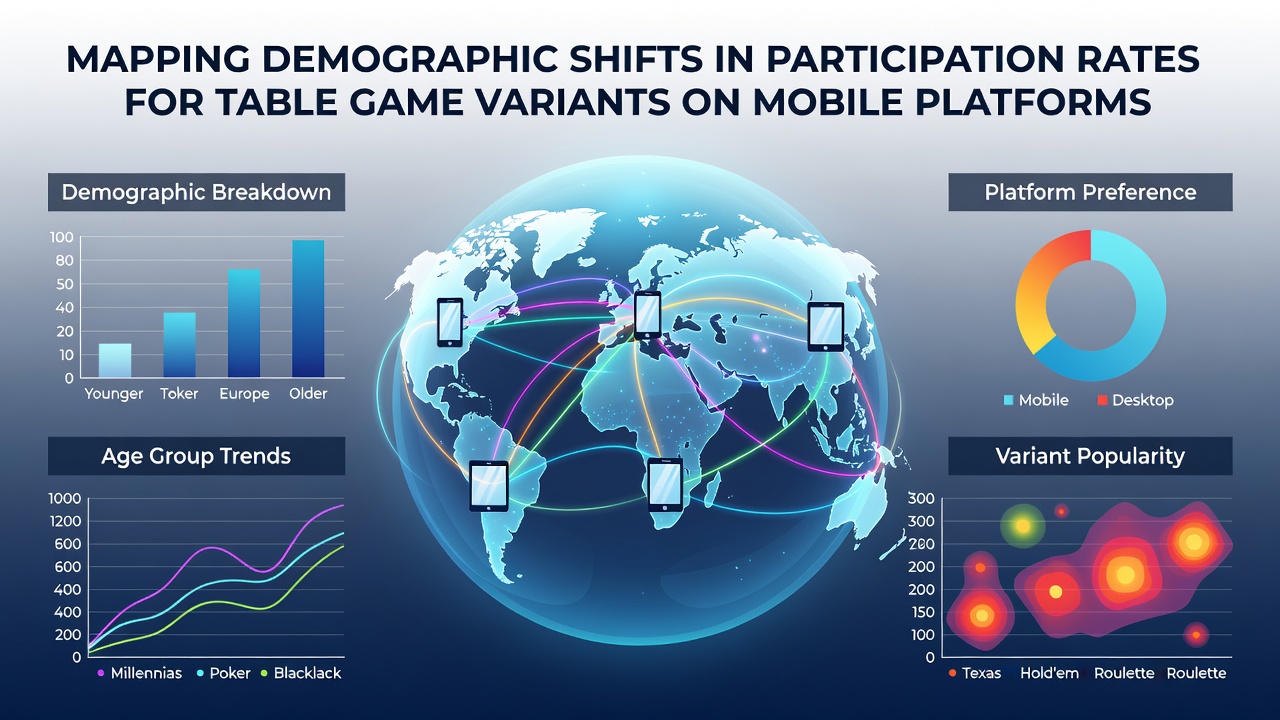
Participation patterns in mobile table game variants have undergone measurable changes since the widespread adoption of smartphones in the mid-2010s, with data tracking shifts across age cohorts, gender distributions, and geographic regions through mid-2026. Reports compiled by industry analysts indicate that blackjack, roulette, and baccarat variants delivered through dedicated apps now draw users from broader demographic pools than their desktop predecessors, while poker formats show steadier but narrower growth among certain segments. These patterns emerge from aggregated user data released in June 2026 by multiple regulatory bodies, highlighting how mobile accessibility intersects with evolving population behaviors.
Age-Based Participation Trends
Users aged 25 to 34 accounted for the largest share of mobile table game sessions in 2025 data, representing approximately 38 percent of total activity across major platforms according to figures compiled by the American Gaming Association. This group favors variants that combine quick rounds with social features, such as live dealer blackjack interfaces and multi-player roulette tables. In contrast, participants over 45 demonstrate higher engagement with simplified baccarat and single-deck poker options, often logging longer average session durations despite lower overall volume. Observers note that the 18-to-24 segment has increased its share by roughly 12 percentage points since 2022, driven by integration with social media login systems and reward mechanics that align with shorter attention cycles typical of that cohort.
Gender Distribution Patterns
Women now comprise 42 percent of mobile table game players in tracked markets, up from 31 percent in 2020 records maintained by state gaming commissions in the United States. Female participation shows particular strength in roulette variants and themed blackjack games that incorporate visual customization, whereas male users continue to dominate high-stakes poker tables and speed-focused blackjack formats. Regional datasets from Australia’s Interactive Gambling Act reporting system reveal similar upward trends among women in the 30-to-40 age range, with participation rates rising steadily in states that permit licensed mobile operators. These shifts coincide with expanded marketing campaigns that emphasize mobile-specific interfaces rather than traditional casino imagery.
Regional and Geographic Variations
North American markets display the most pronounced growth in mobile table game adoption, yet European countries report higher per-user session frequency among urban populations aged 28 to 45. Data released in June 2026 from Canadian provincial regulators shows Ontario and British Columbia leading in new account registrations for table game apps, with notable increases among users who previously engaged only through desktop sites. In Asia-Pacific regions, mobile roulette and baccarat variants attract rising numbers from middle-income brackets in urban centers, while Latin American participation remains concentrated in established markets with mature regulatory frameworks. Cross-border usage patterns appear in aggregated logs, where time-zone differences influence peak hours for international variants such as European roulette wheels hosted on servers in multiple jurisdictions.
Variant-Specific Shifts
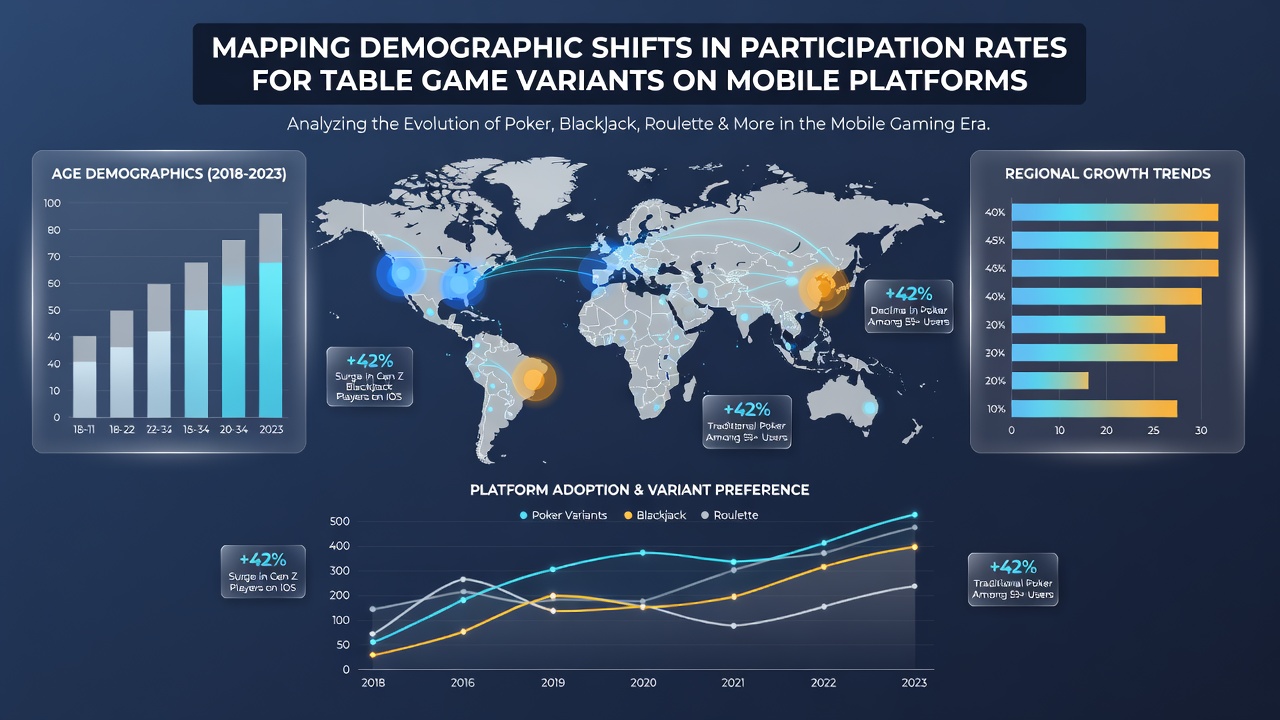
Blackjack remains the most accessed table game variant on mobile, yet its demographic profile has broadened to include more casual participants who favor low-stakes options with tutorial overlays. Roulette participation has grown fastest among users outside traditional casino jurisdictions, particularly in areas where regulatory changes in 2024 and 2025 opened new licensing pathways. Baccarat apps show concentrated appeal within Asian diaspora communities in North America and Europe, with session data indicating repeat engagement during evening hours aligned with major sporting events. Poker variants exhibit slower but stable growth, largely among users who migrated from free-to-play social platforms, according to longitudinal studies referenced in reports from the European Gaming and Betting Association.
Device and Interface Influences
Smartphone screen size and operating system preferences correlate with variant selection, as larger displays facilitate complex poker interfaces while compact screens support faster roulette spins and simplified blackjack decisions. Research from academic institutions tracking app analytics indicates that Android users in emerging markets participate more frequently in free-to-play table game modes before converting to real-money play, whereas iOS users demonstrate higher average deposit amounts across all variants. These technical factors combine with payment method availability to shape ongoing demographic realignments through the first half of 2026.
Conclusion
Demographic mapping of mobile table game participation continues to evolve as new regulatory environments and device capabilities emerge. Data collected through June 2026 underscores steady expansion across age groups and gender lines, with regional differences reflecting both cultural preferences and licensing timelines. Continued collection of anonymized usage statistics will allow further refinement of these patterns without reliance on self-reported surveys.