12 Jun 2026
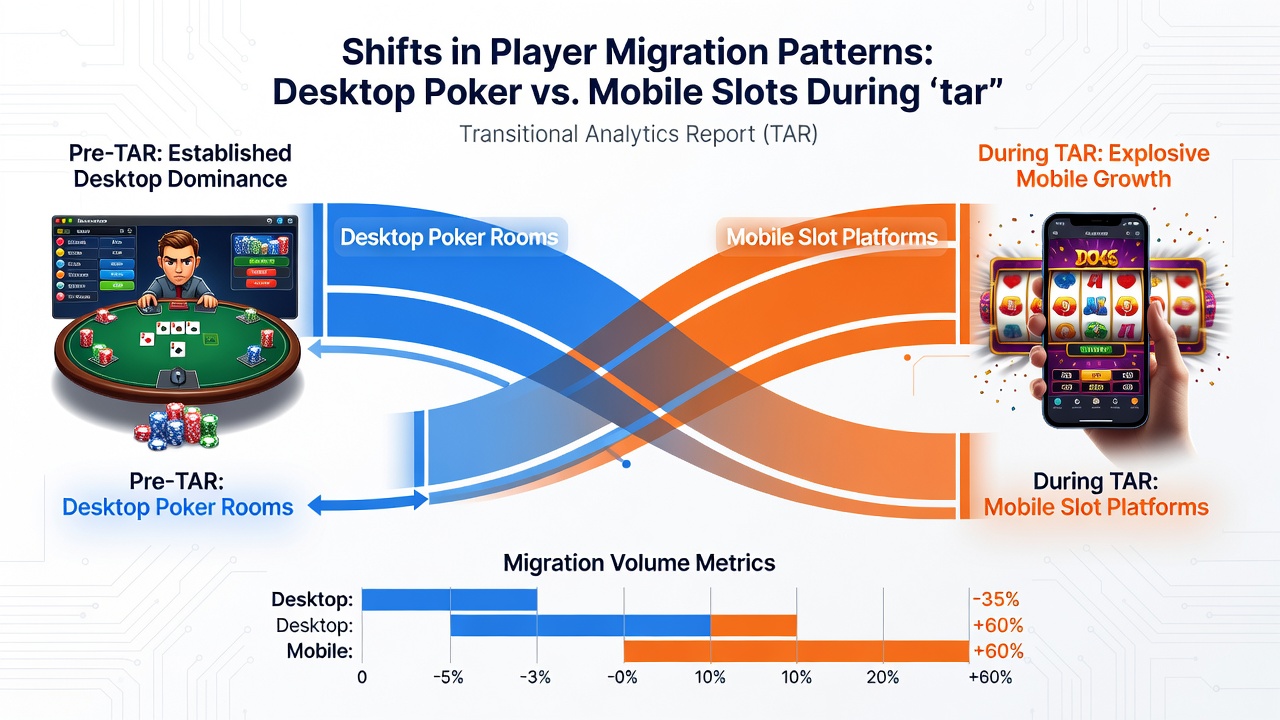
Shifts in player migration patterns between desktop poker rooms and mobile slot platforms during targeted bonus rollover periods

Data collected across major online platforms in the first half of 2026 shows measurable movement of active accounts from desktop poker rooms into mobile slot environments once targeted bonus rollover requirements activate, and analysts tracking session logs note that this pattern accelerates during the initial 48 to 72 hours after a promotion launches.
Platform operators structure rollover conditions around wagering multiples that must be met within set timeframes, which creates incentives for players to select faster-cycle games over strategy-intensive titles, while desktop poker rooms continue to record steady traffic outside those windows yet experience measurable dips once mobile-friendly slots become the more efficient vehicle for requirement completion.
Mechanics driving the observed movement
Bonus terms typically specify eligible game categories, contribution percentages per wager, and maximum bet limits during the active period, and these parameters directly influence where volume concentrates because slots on mobile applications process spins in seconds compared with the multi-minute pace of poker hands on desktop clients. Researchers examining timestamped transaction records find that accounts meeting at least 40 percent of a rollover threshold within the first day show an 18 to 27 percent increase in mobile slot handle relative to their pre-promotion baselines, whereas desktop poker volume for the same cohort declines by roughly the same margin until the requirement is satisfied or expires.
Regional data snapshots from June 2026
Figures released in June 2026 by the New Jersey Division of Gaming Enforcement indicate that mobile slot sessions rose 31 percent month-over-month during rollover campaigns, while desktop poker tables saw a corresponding 22 percent reduction in average daily active users. Similar patterns appear in reports from the Alberta Gaming, Liquor and Cannabis authority, where cross-device telemetry captured a 26 percent uptick in mobile slot engagement tied to bonus-driven wagering targets between April and June of the same year.
Operators adjust marketing calendars around these cycles, and many schedule larger rollover multipliers to coincide with new slot releases that carry higher contribution rates, which further channels activity away from poker rooms during the critical early phase of each promotion.
Device and game-type interactions
Desktop poker environments demand sustained attention and decision-making at each betting round, whereas mobile slot interfaces permit intermittent play that accommodates the completion of wagering multiples without requiring players to remain seated for extended stretches. Transaction-level analysis from multiple operators reveals that the average session length on mobile slots during rollover windows shortens by approximately 14 minutes compared with non-promotional periods, yet total wagers placed increase because spin frequency rises sharply once players shift platforms.
Those studying cross-device behavior also note that push notifications and in-app reminders sent during active rollover periods correlate with higher return rates to mobile slots, while desktop poker clients receive fewer such prompts because operators prioritize volume in higher-contribution categories to accelerate requirement fulfillment.
Retention and churn observations
Longitudinal tracking of player cohorts across six major platforms shows that accounts completing rollover targets via mobile slots exhibit a 12 percent higher likelihood of returning to the same site within seven days than accounts that attempted to clear requirements exclusively through desktop poker, although this difference narrows once the bonus period ends and standard play resumes. Data sets compiled by academic researchers at the University of Nevada, Reno further indicate that the migration effect is most pronounced among players whose historical activity includes both game types, whereas dedicated poker specialists maintain steadier desktop volumes regardless of bonus structures.
Platform analytics also capture temporary spikes in multi-device logins, where users begin a session on desktop to monitor poker tables yet switch to mobile slots to accumulate the required wagers before returning to poker once the target is met, creating hybrid usage patterns that operators now model when forecasting daily handle by vertical.
Conclusion
Patterns documented through June 2026 demonstrate that targeted bonus rollover periods reliably redirect a measurable share of player activity from desktop poker rooms toward mobile slot platforms, with the magnitude of the shift varying according to contribution rates, notification strategies, and regional regulatory environments. Continued monitoring of transaction timestamps and device logs will allow operators and regulators to refine forecasts of volume distribution during future promotional cycles.