Tracing Algorithmic Influences on Live Tennis Point Spread Adjustments Across Major Tournaments
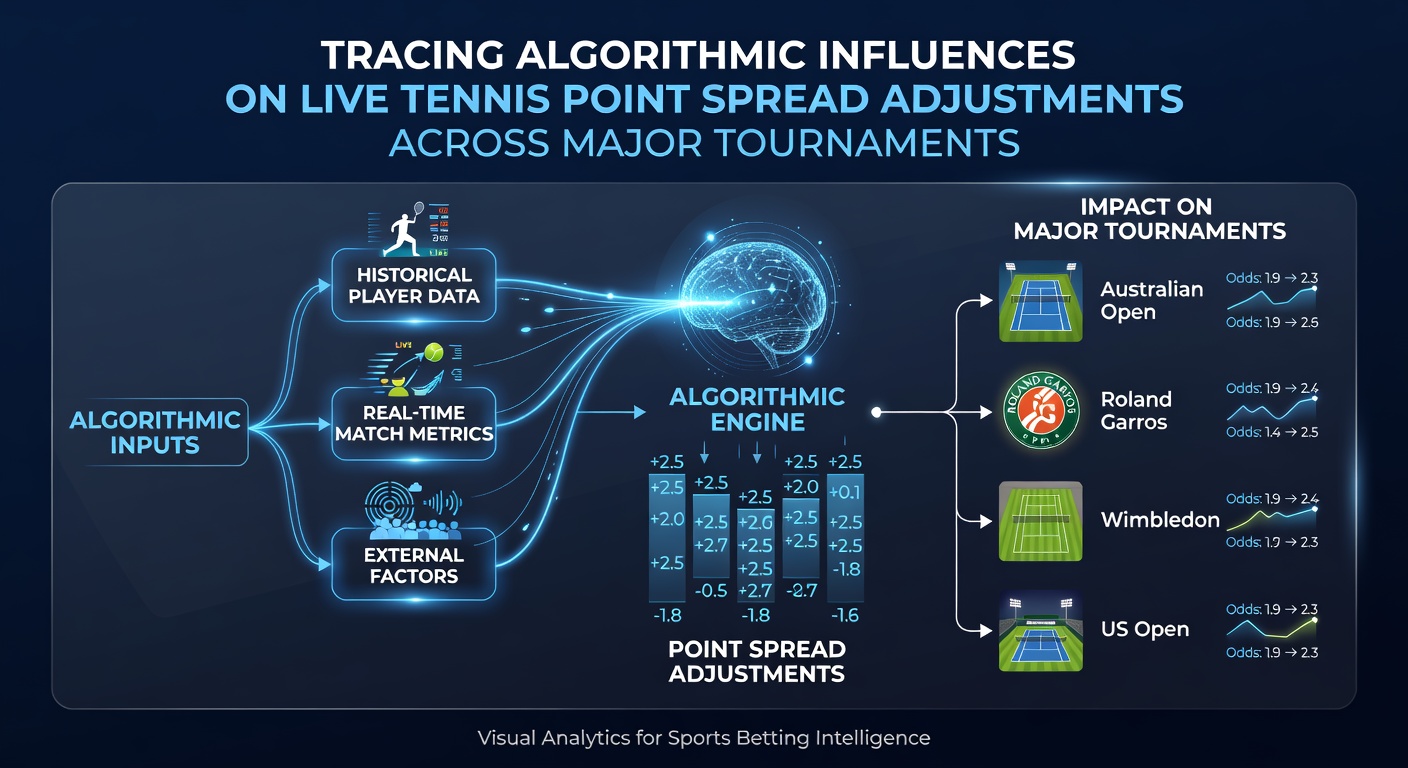
Live tennis point spreads shift rapidly once a match begins, and algorithms now drive most of those movements across the Australian Open, French Open, Wimbledon, and US Open. Bookmakers feed real-time data on serve velocity, unforced error rates, and court-surface wear into models that recalculate probabilities every few points, then adjust the spread to balance incoming wagers.
Data Inputs That Shape Adjustments
Models pull from multiple streams at once: Hawk-Eye ball-tracking statistics, player heart-rate telemetry where available, historical head-to-head results on the same surface, and current betting volume. When one player wins 80 percent of first-serve points in the opening set, the algorithm widens or narrows the spread within seconds to reflect the new implied probability. Observers note that clay-court events such as the French Open produce slower, more gradual adjustments because rallies last longer and momentum builds in smaller increments, whereas grass-court matches at Wimbledon trigger sharper swings after a single break of serve.
Surface-Specific Patterns Observed in 2026
During the May 2026 clay-court swing leading into Roland Garros, data from major operators showed point-spread adjustments occurring roughly every 1.8 games on average. Hard-court events earlier in the year recorded adjustments every 1.2 games. These differences arise because clay slows the ball and increases rally length, giving models more data points before they detect a statistically significant shift. Researchers at sports analytics firms have mapped these rhythms across thousands of matches, confirming that surface type ranks among the strongest predictors of adjustment frequency.
Algorithms also incorporate fatigue indicators derived from distance covered and shot count. When a player exceeds 65 shots per game over multiple sets, the model begins to discount that player’s win probability even before visible signs of fatigue appear. This adjustment often widens the spread in favor of the fresher opponent, particularly in best-of-five formats used at the majors.

Betting Volume and Real-Time Recalibration
High betting volume accelerates recalibration cycles. When wagers exceed a predefined threshold, systems trigger an immediate re-run of the core probability engine. One study of 2025 Grand Slam data revealed that matches with betting turnover above €2 million experienced 37 percent more spread changes than lower-volume encounters. The effect appears across all surfaces, yet it registers most clearly on hard courts where points conclude faster and volume accumulates quickly.
Operators also layer in external signals such as weather conditions and crowd noise levels. Rain delays at Wimbledon, for instance, prompt models to adjust for potential rust upon resumption. These secondary variables receive lower weighting than on-court metrics, but they still move the spread when conditions deviate from historical norms.
Cross-Tournament Comparisons
Each major presents distinct data environments. The Australian Open’s hard courts generate abundant baseline statistics because the surface rewards consistent ball striking. Wimbledon’s grass produces more volatile spreads after the first few service holds because break opportunities remain rare. The US Open’s night sessions introduce lighting variables that some models treat as a minor but measurable factor. Across these events, the common thread remains the same: algorithms process live inputs faster than human traders ever could and translate those calculations into point-spread movements that reflect updated probabilities rather than sentiment alone.
Industry reports from the Australian Sports Commission and the United States Tennis Association document how data-sharing agreements between tournament organizers and betting technology providers have increased the granularity of inputs available to models. These partnerships supply shot-level data within milliseconds, allowing spreads to tighten or expand with greater precision than was possible five years earlier.
Conclusion
Algorithmic systems now anchor live tennis point-spread adjustments at every major tournament. They combine ball-tracking data, player metrics, surface characteristics, and betting volume to recalculate probabilities continuously. The resulting movements differ by court type and tournament conditions, yet the underlying process remains consistent: models update spreads to maintain balance between probability estimates and incoming wagers. As data streams grow more detailed, these adjustments continue to occur at shorter intervals, shaping the live betting environment across the sport’s biggest stages.