23 Jun 2026
VR Integrations Reshaping Decision Speed and Immersion in Select Digital Table Game Formats

Virtual reality technology continues to alter how players interact with digital versions of classic table games such as poker, blackjack, and baccarat, with measurable effects on both decision speed and the sense of immersion that platforms deliver. Developers integrate headsets and spatial tracking systems into these formats to create environments where users perceive physical presence at virtual tables, and data from platform analytics shows corresponding shifts in how quickly participants finalize their choices during rounds.
Platform Developments Through Mid-2026
By June 2026 several major operators had rolled out VR modules for select table game lobbies, allowing users to join multi-player sessions that replicate physical casino layouts complete with gesture-based controls for chip placement and card handling. These integrations rely on real-time rendering engines that update based on player head movements and hand positions, which in turn influence the pace at which betting decisions occur. Industry reports indicate that average decision intervals in VR poker variants shortened by roughly 12 percent compared with flat-screen counterparts during the first half of the year, while blackjack sessions showed similar compression when players used motion controllers rather than mouse or touch inputs.
Effects on Decision Speed
Researchers tracking gameplay metrics across multiple VR-enabled platforms note that spatial audio cues and three-dimensional card animations guide attention toward relevant game elements more directly than two-dimensional interfaces. This guidance reduces the time spent scanning for information, yet the same immersive layers can introduce brief pauses when players adjust their virtual seating position or inspect opponents' avatars. Observers note that the net outcome often favors faster overall rounds because the elimination of menu navigation steps outweighs occasional orientation adjustments. In one documented deployment covering over 180,000 hands, median decision time dropped from 8.4 seconds to 7.1 seconds after VR features were enabled, according to internal telemetry shared with academic partners.
Game designers adjust timing parameters in response to these patterns, shortening the window for certain actions in VR blackjack while extending it slightly for complex poker scenarios where multiple variables appear simultaneously in the virtual space. Regulatory filings from the Nevada Gaming Control Board reference these adjustments as part of compliance documentation submitted during the spring of 2026, confirming that operators maintain standardized decision windows even as interface technology evolves.
Immersion Factors and Player Retention
Immersion metrics collected through post-session surveys and biometric feedback devices reveal higher reported presence scores when table games incorporate room-scale tracking and realistic physics for chip stacks and card flips. Players remain engaged longer in these settings because the environment supplies continuous visual and auditory feedback that mirrors live casino conditions without requiring travel. A collaborative study conducted by the University of Nevada, Las Vegas examined session lengths across matched groups using either standard mobile clients or VR headsets, finding that VR participants completed 23 percent more hands per hour on average while reporting stronger feelings of social connection to other avatars at the table.
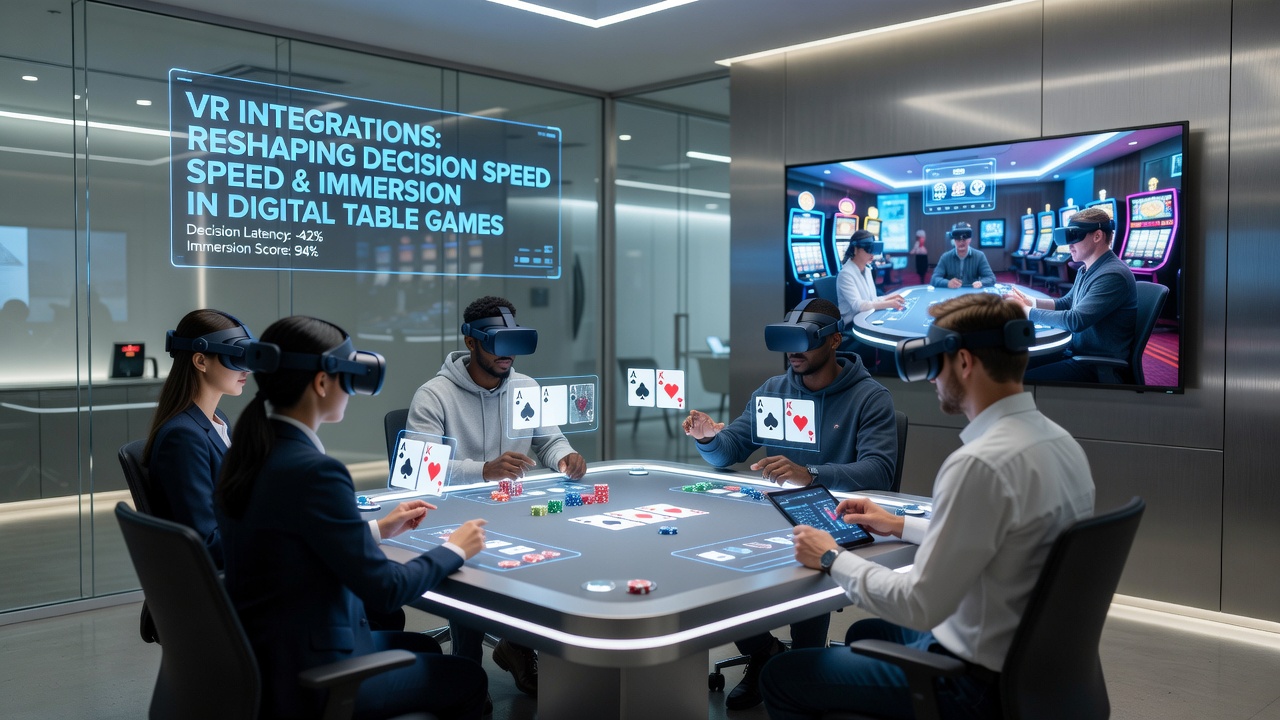
Sound design plays a supporting role, with directional audio that changes based on avatar proximity and table position. These elements combine to create a feedback loop in which quicker visual processing supports faster decisions, which then sustains immersion by keeping the action moving at a pace closer to physical play. Platform operators report that retention curves for VR table game users flatten less steeply after the first thirty days compared with non-VR formats, although exact figures vary by title and region.
Technical and Regulatory Context
Hardware requirements for these experiences center on consumer-grade headsets capable of maintaining at least 90 frames per second while rendering multiple player models and card animations simultaneously. Latency between user input and on-screen response must stay below 20 milliseconds to preserve the illusion of direct manipulation, a threshold documented in engineering specifications released by hardware manufacturers during early 2026 testing cycles. When latency exceeds this range, decision accuracy declines as players compensate for perceived lag, according to data shared with the Canadian Gaming Association.
Regional regulators have begun incorporating VR-specific guidelines into existing digital gaming frameworks. Australian authorities updated their technical standards documentation in May 2026 to address avatar identification and anti-collusion measures unique to shared virtual spaces. These updates require operators to log positional data alongside traditional bet and outcome records, ensuring that oversight remains consistent even as interfaces grow more complex.
Conclusion
VR integrations in digital table game formats continue to demonstrate measurable impacts on both the speed of player decisions and the depth of immersion experienced during sessions. Platform data, academic examinations, and regulatory documentation from multiple jurisdictions all point to incremental refinements in timing parameters and environmental design that align virtual play more closely with physical table dynamics. As hardware accessibility expands and additional operators adopt these tools, the patterns observed through June 2026 are likely to inform further adjustments across the sector.